Archive for January, 2026

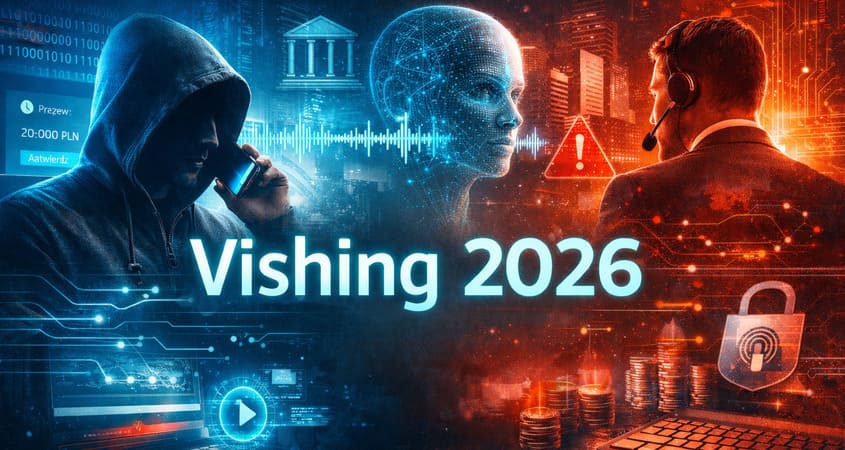
Vishing 2026

Vishing in 2026. Voice as an Attack Vector on Trust

In a world where network communication is encrypted, identities are protected by multi factor authentication, and access to systems is designed according to Zero Trust principles, one of the most effective attack vectors remains… a phone call. Vishing, meaning fraud based on voice driven social engineering, has not only failed to disappear with the advancement […]


MPIC

What Is MPIC? Multi-Perspective Issuance Corroboration as the New Standard for Domain Validation in SSL/TLS Certificates

With the growing scale and complexity of attacks on Internet infrastructure, traditional domain validation models have stopped meeting the requirements of modern public PKI. In response to real threats such as selective DNS spoofing and regional BGP hijacking, global certificate authorities, including DigiCert and Sectigo, implemented the mandatory Multi-Perspective Issuance Corroboration (MPIC) mechanism in 2025.

VMC

Verified Mark Certificate (VMC) – The Visual Trust Layer in Modern Email Security Architecture

From a technical perspective, email is today one of the best secured application-layer protocols. TLS transport encryption is a standard, DKIM signatures are widespread, and DMARC enables real enforcement of domain identity policy. Despite this, incident statistics remain unforgiving. Email is still responsible for the largest number of successful phishing attacks and security breaches resulting […]

HackerGuardian PCI Scan

Hackerguardian PCI Scan – Practical Use of PCI DSS Scans to Protect Payment Processing Environments

The security of card payment processing environments has operated for years within a specific dualism. On one hand, it is a heavily regulated area, with clearly defined formal requirements imposed by card schemes. On the other hand, it remains one of the most frequently attacked segments of IT infrastructure, particularly in e-commerce, digital services, and […]

PKI Enterprise Cloud PKI

PKI Enterprise vs Cloud PKI: Optimising Architecture, Scalability and TCO in the Hyperscale Era

In the face of dynamic digital transformation, where the Zero Trust model is becoming the new standard and machine identity (workload identity) is just as critical as user identity, a reliable Public Key Infrastructure (PKI) forms the absolute foundation of security. For large enterprises, the choice of the right PKI architecture between the traditional Enterprise […]

SiteLock

SiteLock Security: Inside the Architecture of Web Application Scanning

Modern web application security is no longer a one-dimensional problem. Just a few years ago, most incidents could be attributed to simple configuration errors or missing CMS updates. In 2025 and 2026, however, multi-stage attacks, automated botnet campaigns, and abuse of application logic dominate, often leaving no obvious signatures. In this context, traditional vulnerability scanners […]

HSTS

HSTS and Preload: Architecture of Persistent Trust in the Transport Layer

Encryption over HTTPS solves many problems, but one element has remained a critical vulnerability point for years: the moment when the browser still does not yet know whether it should use HTTPS. This stage precedes the actual TLS connection. It happens before the handshake is performed, before the certificate is verified and before the server […]

OWASP TOP10 2025

OWASP Top 10 2025 – The Final Risk Map for Web Applications

By the end of 2025, OWASP published the final version of OWASP Top 10 2025. Although the name suggests another iteration of a well known document, in practice this edition is one of the most mature and, at the same time, one of the most uncomfortable releases in the project’s history. Uncomfortable because OWASP Top […]

Add A Knowledge Base Question !

You will receive an email when your question will be answered.

+ = Verify Human or Spambot ?